
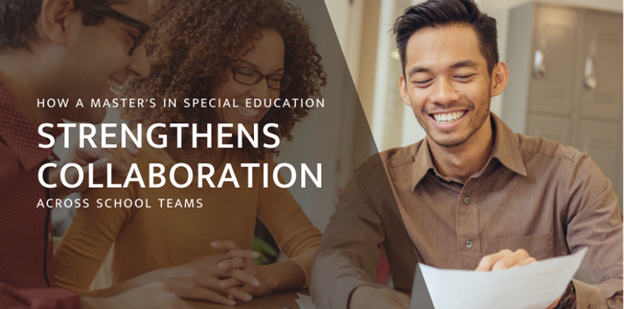
Effective special education depends on collaboration. From general education teachers and specialists to administrators and families, supporting students with diverse learning needs requires coordinated effort and shared understanding. As schools continue to prioritize inclusive practices, educators who can collaborate effectively across teams are increasingly essential.
A master’s in special education helps educators build the communication, leadership, and advocacy skills needed to work successfully within these team-based environments. Whether you are exploring online special education master’s programs or already working in a school setting, advanced training can strengthen your ability to support students while contributing meaningfully to your school community.
Why Collaboration Is Essential in Special Education
Special education professionals rarely work alone. Daily responsibilities often involve coordinating with:
- General education teachers
- School psychologists and counselors
- Speech-language pathologists and therapists
- Administrators and support staff
- Families and caregivers
Collaboration ensures that Individualized Education Programs (IEPs) are implemented consistently and that students receive aligned academic, behavioral, and social-emotional support. When communication breaks down, students may experience gaps in services or inconsistent expectations.
Strong collaboration also supports inclusive classrooms—an approach explored further in Eastern’s related article, The Importance of Advocacy and Inclusion in Special Education. Together, advocacy, inclusion, and collaboration form the foundation of effective special education practice.
How a Master’s in Special Education Builds Collaborative Skills
Graduate-level preparation goes beyond instructional techniques. A master’s in special education emphasizes the interpersonal and systems-based skills educators need to function as effective team members and leaders.
Key collaborative competencies developed through advanced study include:
- Professional communication: Clearly explaining student needs, data, and instructional strategies to diverse stakeholders
- Team-based problem-solving: Contributing to shared decision-making during IEP meetings and intervention planning
- Data literacy: Interpreting assessments and progress monitoring results to inform group discussions
- Advocacy: Supporting students while navigating legal and ethical responsibilities
These skills empower educators to participate confidently in cross-functional teams and to help guide conversations toward student-centered outcomes.
Partnering Effectively with Families and Caregivers
Families are vital members of the special education team. Successful collaboration requires empathy, transparency, and the ability to communicate complex information in an accessible way.
Graduate programs in special education often focus on:
- Family-centered communication strategies
- Cultural responsiveness and inclusive engagement
- Ethical considerations and compliance in special education
With this preparation, educators are better equipped to build trust with families, facilitate productive conversations, and ensure caregivers feel informed and respected throughout the educational process.
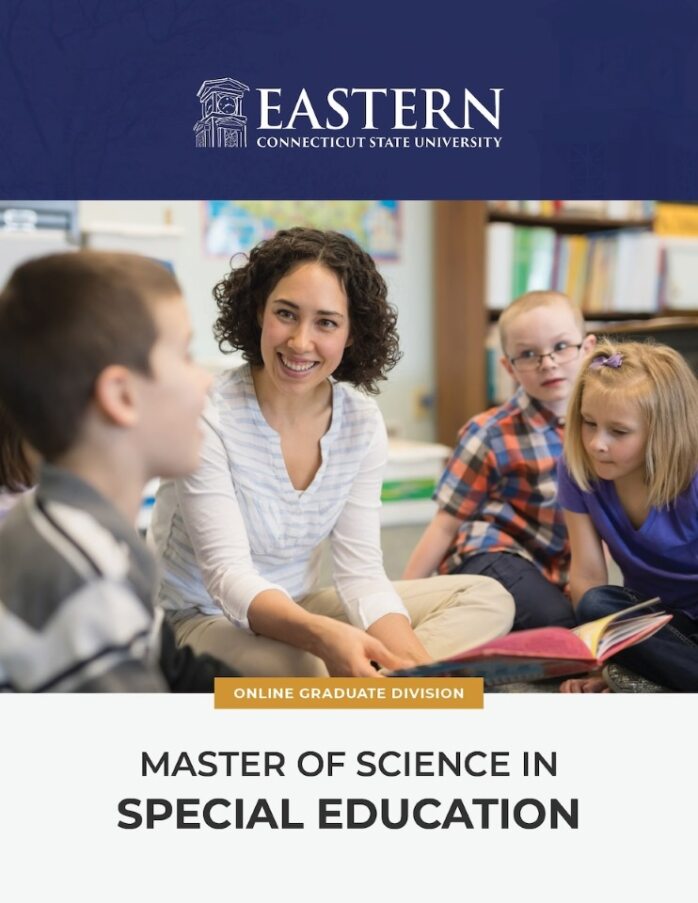
Online M.S. in Special Education
Embark on a transformative journey with an online M.S. in Special Education. Hone expertise, empower students, and open doors to impactful careers. Start your academic journey today.
The Role of Online Learning in Collaborative Growth
For working educators, online special education master’s programs offer flexibility without sacrificing academic rigor. Online learning environments allow students to apply coursework concepts directly to their current roles, reinforcing collaboration skills in real time.
An online special education degree can support professional growth by:
- Encouraging reflection on current team experiences
- Facilitating discussion with peers from diverse school settings
- Allowing educators to balance graduate study with full-time responsibilities
Curious how this kind of program fits into a busy professional schedule? You can explore the structure and learning outcomes of Eastern’s program here.
Collaboration as a Pathway to Leadership
Educators with advanced training in special education are often called upon to take on expanded responsibilities. These may include mentoring colleagues, supporting inclusive initiatives, or contributing to school-wide improvement efforts.
According to the U.S. Bureau of Labor Statistics, special education remains a critical field within education, and professionals with advanced preparation are well positioned to support evolving student needs. Collaboration-focused leadership helps schools maintain instructional quality while adapting to change.
A master’s degree prepares educators to:
- Lead IEP meetings with confidence
- Support collaborative instructional planning
- Serve as a resource for colleagues and administrators
Advance Your Impact with Eastern Connecticut State University
Eastern Connecticut State University’s Master of Science in Special Education is designed for educators who want to strengthen their impact through collaboration, advocacy, and inclusive practice. The program emphasizes practical application and reflective learning to help graduates support students effectively across school teams.
Through Eastern’s program, students develop:
- Advanced knowledge of special education principles
- Skills to collaborate across disciplines and roles
- Preparation to support diverse learners in inclusive settings
Learn more about the Master of Science in Special Education program at Eastern Connecticut State University.
Take the Next Step
Collaboration is at the heart of effective special education. By earning a master’s in special education, educators can strengthen communication, lead with confidence, and advocate more effectively for students who need it most.
If you are ready to expand your expertise and contribute more fully to your school community, Eastern’s online program offers a supportive path forward. Explore the program and take the next step in your professional journey today.